
News
NEWS
Tank Classification and Design Specifications
Time : 2025-12-13
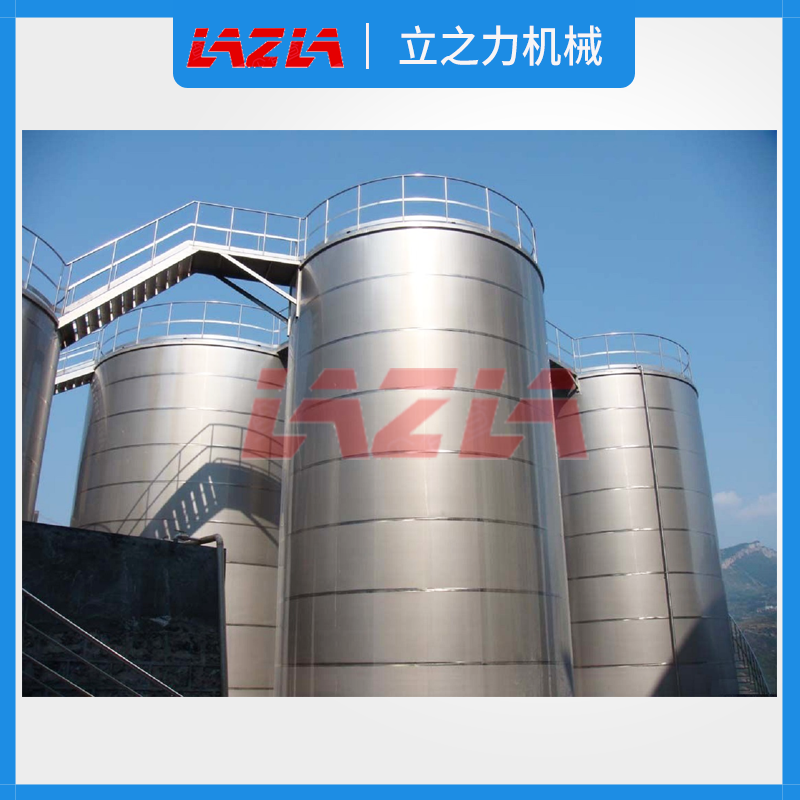
Storage tanks are widely used in the fluid industry for storing raw materials, finished products, and intermediate products. They play an irreplaceable role in ensuring the safe operation of equipment, saving energy, reducing emissions, and improving overall management.
National strategic reserves also rely on various types of storage tanks.
Industrial storage tanks are generally made of steel, with materials such as carbon steel, cryogenic steel, and stainless steel selected based on the characteristics of the stored medium, storage temperature, and pressure parameters.
Other materials such as fiberglass and plastics are not considered due to factors such as fire resistance and pressure resistance.
Storage tanks are classified by structure into: spherical tanks, horizontal tanks, arched tanks, external floating roof tanks, and internal floating roof tanks.
1.1 Spherical Tanks: Ambient temperature spherical tanks, such as those for liquefied petroleum gas, nitrogen, coal gas, and oxygen. These tanks have relatively high pressures, depending on the saturated vapor pressure of the liquefied gas or the outlet pressure of the compressor. Ambient temperature spherical tanks are designed for temperatures greater than -20℃. Cryogenic spherical tanks are designed for temperatures less than or equal to -20℃, generally not lower than -100℃. Cryogenic spherical tanks, designed for temperatures below -100℃, are typically used to store media below their liquefaction point at low pressures, sometimes atmospheric pressure. These tanks are widely used in the fluid industry for storing raw materials, finished products, and intermediate products, playing an irreplaceable role in ensuring safe operation of equipment, saving energy, reducing emissions, and improving overall management.
National strategic reserves also rely heavily on various types of storage tanks. Industrial storage tanks are generally made of steel, with materials such as carbon steel, cryogenic steel, and stainless steel selected based on the characteristics of the stored medium, storage temperature, and pressure parameters. Other materials, such as fiberglass and plastics, are not considered due to fire resistance and pressure resistance requirements.
Storage tanks are classified by structure into: spherical tanks, horizontal tanks, arched tanks, external floating roof tanks, and internal floating roof tanks. Due to high insulation requirements, double-spherical shells are often used.
1.2 Horizontal tanks have small volumes (generally less than 100 cubic meters) and large floor space requirements. They are mainly used for storing chemicals such as acids and alkalis. In manufacturing units, they are also commonly used to store small volumes of other media (storage temperature with a saturated vapor pressure greater than or equal to the atmospheric pressure of the substance). A tilted cylinder, with its axial direction parallel to the ground, is typically supported by a saddle and usually includes an accumulator. It can withstand very high positive and negative pressures and is a type of pressure vessel.
1.3 Arched Storage Tanks Arched storage tanks are steel containers with a dome-shaped, cylindrical body. They are simple to manufacture and inexpensive, making them widely used in many industries both domestically and internationally. The most common volume is 1000–10000 m³, with the largest arched storage tank in China reaching 30000 m³. Arched tanks are generally low-pressure or atmospheric-pressure tanks, widely used in the fluid industry, commonly for Class BB and C liquids. They can also be used for special storage needs in AB and BA liquid storage facilities, and are used in large-scale LNG cryogenic storage facilities abroad. Large acid and alkali storage tanks sometimes utilize arched designs. According to GB50160, the fire hazard classifications for liquefied hydrocarbons and flammable liquids are as follows.
Saturated vapor pressure refers to the vapor pressure at the gas-liquid interface in a closed container when a gas-liquid two-phase equilibrium is reached at a certain temperature, and its variation with temperature. For liquefied petroleum gas (LPG) and liquefied natural gas (LNG), which are not pure substances but mixtures, the saturated vapor pressure is related to the mixing ratio. It can be calculated using Dalton's law and Raoult's law.
1.4 Floating roof storage tanks consist of a floating roof on the surface of the medium and a vertical cylindrical tank wall. The floating roof rises and falls with the increase or decrease of the medium stored in the tank. An annular sealing device between the outer edge of the floating roof and the tank wall ensures that the medium inside the tank is always directly covered by the inner floating roof, reducing evaporation. Floating roof tanks are commonly used for storing AB and BA liquids with saturated vapor pressures below atmospheric pressure. Floating roof tanks are divided into internal floating roof tanks and external floating roof tanks. Floating roof tanks are typically used to store volatile petroleum products, such as crude oil, gasoline, or kerosene in open cylindrical steel tanks. Compared to arched water tanks without a floating roof, there is no space for evaporation. This not only reduces product evaporation loss but also reduces environmental pollution and lowers the risk of flammable media mixing with air to form explosive gases. A 100-500mm gap is maintained between the tank shell and the external floating roof to prevent jamming during operation.
An edge-sealing system reduces edge evaporation, and the floating roof features a central drainage system to ensure smooth drainage during rain and snow, preventing sinking accidents. Internal floating roof tanks are floating roof tanks with a roof plate, combining an arched roof and an internal floating roof.
Internal floating roof tanks have unique advantages: First, compared to traditional floating roof tanks, the fixed top cover effectively prevents the intrusion of wind, sand, rain, snow, or dust, ensuring the quality of the stored liquid. Simultaneously, the internal floating roof floats on the liquid surface, eliminating vapor space and reducing evaporation losses by 85% to 96%; reducing air pollution and lowering the risk of fire and explosion; even if a fire occurs, it generally will not cause a large-scale combustion. It is easy to maintain the quality of stored liquids, making it particularly suitable for storing high-grade gasoline, jet fuels, and toxic petrochemical products.
Because there is no gas space on the liquid surface, corrosion of the tank walls and top is reduced, thus extending the tank's service life. Secondly, under the same sealing conditions, evaporation losses can be further reduced compared to floating roofs. However, the construction requirements for floating roof and arched tanks are higher than the steel consumption; maintenance is inconvenient (due to the sealing structure), and these tanks are not easily scaled up, currently generally not exceeding 10,000 m³.
In the fluid industry, storage tanks are generally grouped together according to their application or pressure rating, forming a tank area.
Based on the medium and pressure rating, they are generally divided into atmospheric pressure tank areas, spherical tank areas, acid and alkali tank areas, and cryogenic tank areas.
Based on application, they are usually divided into raw material tank areas, intermediate tank areas, and finished product tank areas.
Within each tank area, further subdivisions are made based on the type of storage tank, the properties of the medium, the pressure rating, explosion-proof requirements, and fire protection requirements.
Previous page:Already the first
RECENT NEWS
Online Message