
News
NEWS
What are the structural characteristics of stainless steel storage tanks?
Time : 2025-12-13
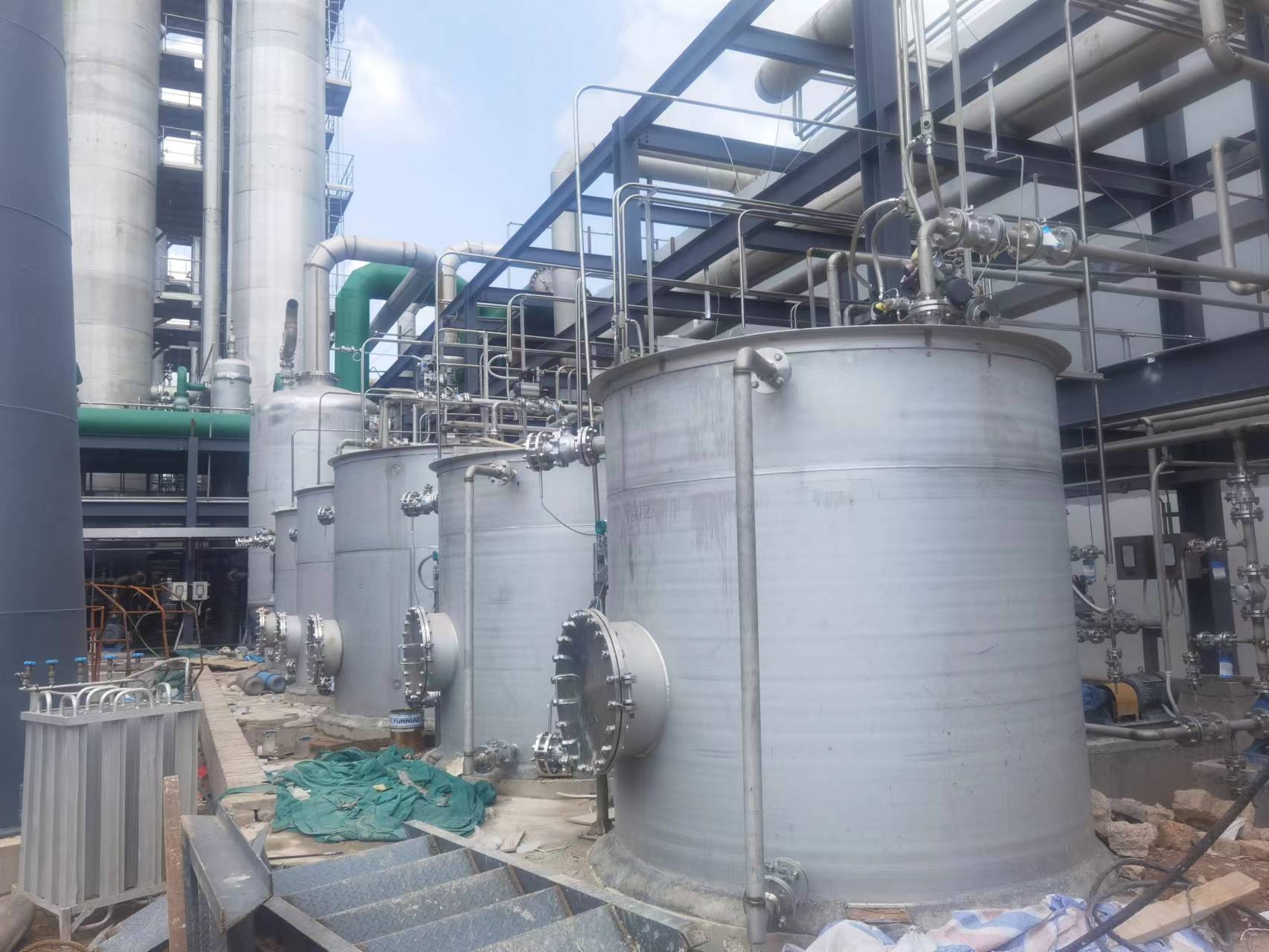
Stainless steel storage tanks have a wide range of applications, including the food and pharmaceutical industries, brewing and dairy products, and the chemical industry.
What are the structural classifications of stainless steel horizontal storage tanks?
Horizontal storage tanks are used to store crude oil, vegetable oil, chemical solvents, water, or other long-form petroleum products. Horizontal storage tanks consist of end caps, horizontal circular or elliptical tank walls, and a saddle base. They are commonly used in production processes or gas stations. The volume of horizontal storage tanks is generally less than 100 cubic meters, and they are generally circular, elliptical, or other irregular shapes. Horizontal storage tanks can be classified in various ways; here, they are classified according to their application.
1. Semi-underground horizontal storage tanks: These are horizontal storage tanks buried at a depth exceeding half their height. The highest oil level inside the tank is no more than 2 meters higher than the lowest elevation of the adjacent area.
2. Buried horizontal storage tanks: These are horizontal storage tanks where the highest oil level inside is 0.2 meters lower than the lowest elevation of the adjacent area, and the soil thickness above the tank is no less than 0.5 meters. These horizontal tanks have low losses and low fire risk.
II. Characteristics of Stainless Steel Water Tanks:
1. Stainless steel water tanks have advantages such as beautiful appearance, light weight, low cost, long service life, simple installation, and wide application.
2. They are hygienic, non-toxic, and corrosion-resistant. They fully reflect and absorb heat under sunlight, preventing algae growth inside and ensuring clean water quality at all times.
3. Stainless steel water tanks are equipped with air filters and inspection/cleaning manholes. They also have anti-poisoning locking devices to protect the water source from secondary pollution. They are currently the best water storage and supply equipment internationally, making stainless steel water tanks the optimal choice for domestic water tanks. III. Precautions for Stainless Steel Water Tanks:
1. Stainless steel water tanks are highly corrosion-resistant and unaffected by external air or residual chlorine in the water. Each tank undergoes rigorous pressure testing and inspection before leaving the factory, with a service life of over 20 years under normal pressure. Note that this is under normal pressure!
2. Stainless steel water tanks have excellent sealing properties; the airtight design completely prevents harmful substances and insects from entering the tank, ensuring that the water quality is not polluted by external factors and that red worms do not breed.
3. During transportation, appropriate lifting equipment should be selected. Lifting equipment should only apply force using supports, the tank body, or hooks. It is not allowed to clamp or drag weak points such as pipes or the bottom of the packaging. During lifting, the equipment must not collide with other objects and should be lifted and placed gently. When the stainless steel tank enters the installation position, it should be handled smoothly, and unstable methods such as crushing or prying should not be used.
4. Stainless steel water tanks should ideally be stored indoors. If stored outdoors, they should be covered to avoid exposure to sunlight, rain, and impacts. In winter, check for water to prevent freezing damage. For assembling stainless steel tanks or polymer reactors with mechanical seals, the sealing parts should be doubly protected and kept clean.
Previous page:Tank Classification and Design Specifications
RECENT NEWS
Online Message